
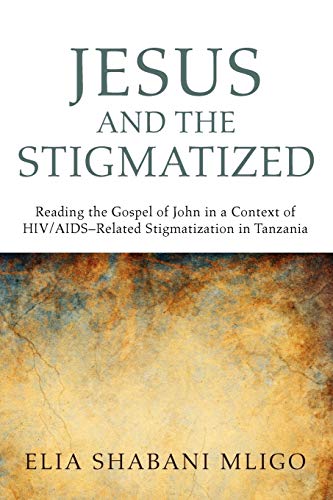
Jesus and the stigmatized: reading the Gospel of John in a context of HIV/AIDS-related stigmatization in Tanzania Elia Shabani Mligo ; with a foreword by Halvor Moxnes.
Material type: TextPublication details: Eugene, OR : Pickwick Publications, c2011.Description: xix, 454 p. ; 24 cmISBN:
 - 9781608997060 (pbk.)
- 1608997065 (pbk.)
- Bible -- Study and teaching -- Tanzania
- Bible. John -- Criticism, interpretation, etc
- AIDS (Disease) -- Religious aspects -- Christianity -- Tanzania
- HIV infections -- Religious aspects -- Christianity -- Tanzania
- AIDS (Disease) -- Social aspects -- Tanzania
- AIDS (Disease) -- Patients -- Tanzania
- AIDS (Disease) in women -- Tanzania
- Stigma (Social psychology)
- Marginality, Social -- Religious aspects -- Christianity
- Church work with the sick
- AIDS phobia
- SPC BV4460.7 MLI
| Item type | Current library | Collection | Call number | Copy number | Status | Date due | Barcode | Item holds | |
|---|---|---|---|---|---|---|---|---|---|
 Books
Books
|
JST Library SpecialCollection | BV<br>Practical Theology, Liturgy, Church,<br>Missiology, Pastoral, Mysticism | SPC BV 4460.7 MLI (Browse shelf(Opens below)) | Available | 102909 | ||||
|
Books
|
Hekima Special Collections SpecialCollection | BV<br>Practical Theology, Liturgy, Church,<br>Missiology, Pastoral, Mysticism | BV 4460.7 MLI (Browse shelf(Opens below)) | 2 | Available | 113240 |
Browsing JST Library shelves, Shelving location: SpecialCollection, Collection: BV<br>Practical Theology, Liturgy, Church,<br>Missiology, Pastoral, Mysticism Close shelf browser (Hides shelf browser)

|

|
|
No cover image available | ||
| BV 4460.7 MLI Jesus and the stigmatized: | SPC BV 186.7 AFR AfricaPraying : a handbook on HIV-AIDS sensitive sermon guidelines and liturgy / | SPC BV 4460.7 MLI Jesus and the stigmatized: | SPC BV 3625.S5 STO A story worth telling: essays in honour of Cardinal Napier |
Includes bibliographical references (p. 413-430) and indexes.
General introduction -- Theoretical perspectives on stigmatization -- The context of HIV?AIDS-related stigmatization in Tanzania -- Participant-centered bible study : methodological issues -- The gospel of John and stigmatization I : scholarly reading of texts -- The gospel of John and stigmatization II : community reading of texts -- From stigmatizationto compassion : a christology from below -- Towards being faithful communities of the disciples of Jesus : implications for contemporary churches.
"In this volume Elia Shabani Mligo draws on his fieldwork among people living with HIV/AIDS (PLWHA) in Tanzania, selects stigmatization as his perspective, and chooses participant-centered contextual Bible study as his method to argue that the reading of texts from the Gospel of John by PLWHA (given their lived experiences of stigmatization) empowers them to reject stigmatization as unjust. Mligo's study shows that Christian PLWHA reject stigmatization because it does not comply with the attitude of Jesus toward stigmatized groups in his own time. The theology emerging from the readings by stigmatized PLWHA, through their evaluation of Jesus' attitudes and acts toward stigmatized people in the texts, challenges churches in their obligatory mission as disciples of Jesus. Churches are challenged to reconsider healing, hospitality and caring, prophetic voices against stigmatization, and the way they teach about HIV and AIDS in relation to sexuality. Churches must revisit their practices toward stigmatized groups and listen to their voices. Mligo argues that participant-centered Bible-study methods similar to the one used in this book (whereby stigmatized people are the primary interlocutors in the process) can be useful tools in listening to the voices of stigmatized groups"--
There are no comments on this title.